
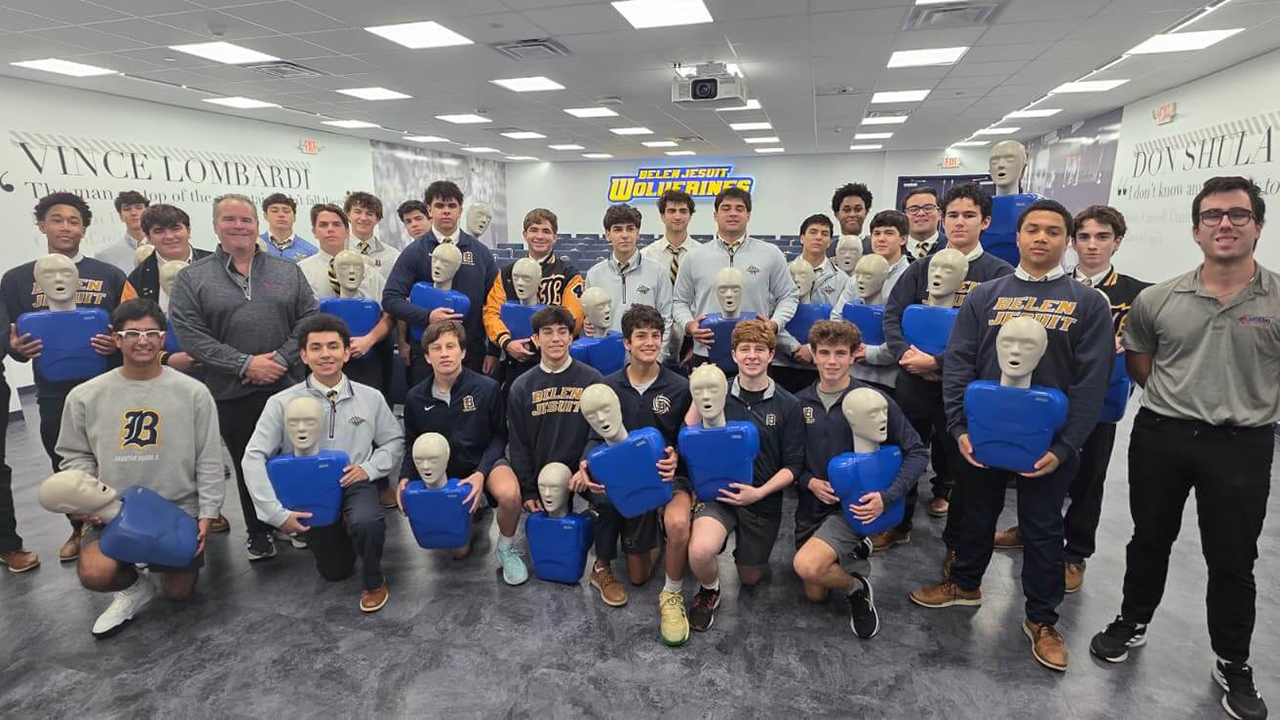
By now, Florida schools should already be well into planning for the state’s new AED and cardiac emergency requirements.
The deadline most people focus on is July 1, 2027. By that date, every public school, including charter schools, must have at least one operational automated external defibrillator, or AED, on school grounds. But the law is broader than that. Schools also need a PULSE plan, trained staff, maintenance procedures for the device, and coordination with local emergency services. School districts must also provide basic first aid and CPR instruction to students once in middle school and once in high school, and that instruction must include hands-on CPR practice and AED use.
For school leaders and administrators, that means this is no longer something to think about later. It is already part of what should be happening now.
What Florida’s New School AED Law Requires in 2026
The easiest way to understand the law is to look at the major pieces schools are expected to have in place before the deadline arrives.
Every Public School Must Have a PULSE Plan
Florida now requires each public school to develop a Plan for Urgent Life-Saving Emergencies, or PULSE plan. That plan is meant to guide school personnel in responding to sudden cardiac arrest and similar life-threatening emergencies on school grounds. The statute says each plan must use evidence-based core elements and take into account recommendations for school cardiac emergency response.
That matters because the law is not simply asking schools to buy equipment. It is asking them to build a response plan that staff can actually follow in a real emergency.
Schools Must Coordinate With Local Emergency Services
The law also requires school officials to work directly with local emergency service providers so the school’s PULSE plan fits into local emergency response protocols. In practical terms, that means a school’s internal response should connect clearly with what happens once EMS is activated.
For schools, that kind of coordination is easy to overlook when the focus stays on the AED itself. But it is a central part of the requirement.
Every School Must Have at Least One AED by July 1, 2027
No later than July 1, 2027, each public school, including charter schools, must have at least one operational AED on school grounds. The AED must be in a clearly marked and publicized location. The law also requires schools to maintain the device according to the manufacturer’s guidelines, keep verification records, and register the AED’s location with the local EMS medical director.
That is why this requirement tends to be more involved than it may sound at first. Installing the AED is only one part of the process. Schools also need a way to maintain it, document it, and make sure people know where it is.
Appropriate Staff Must Be Trained in CPR and AED Use
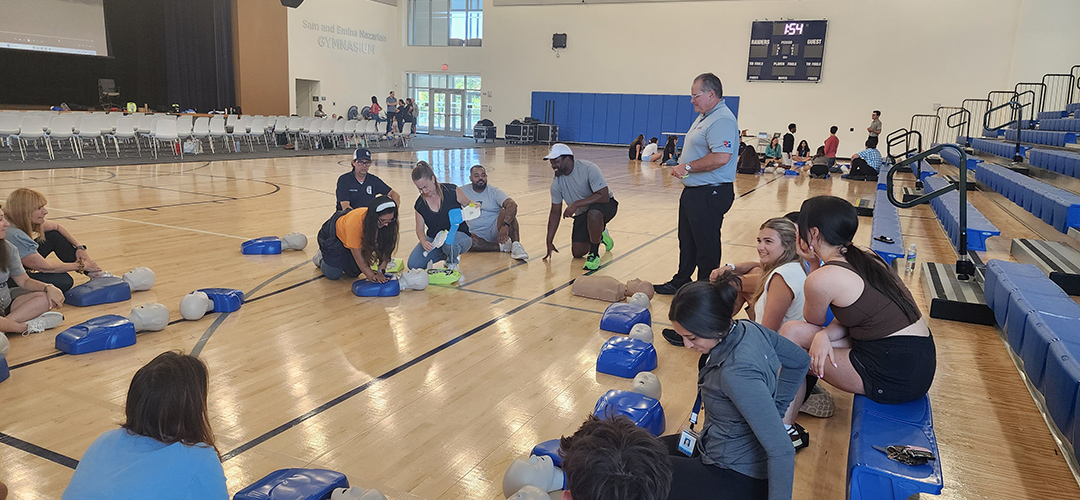
The statute also requires appropriate staff to be trained in first aid, CPR, and AED use. The law does not treat training like a side detail. It treats trained personnel as part of the school’s ability to respond effectively when something serious happens.
For Miami schools, this is where the planning starts to feel more concrete. Once a campus moves past simply reading the law, the next question is usually who should be trained first and how that training will fit into the school calendar.
Student CPR and First Aid Instruction Is Part of the Requirement Too
The new law also changed Florida’s student training requirements. School districts must now provide basic first aid and CPR training to students once during middle school and once during high school through a physical education or health class. That instruction must include hands-on CPR skills and AED use.
That means the law reaches beyond campus operations. It also affects curriculum planning, class schedules, and instructional resources.
When Florida Schools Must Have an AED on Campus
The placement deadline is July 1, 2027. But for most schools, waiting until 2027 to act would create unnecessary pressure.
Why 2026 Is the Real Planning Window
On paper, a 2027 deadline can sound comfortably distant. In practice, school implementation rarely moves that quickly. Budgets need approval. Equipment must be purchased. Staff training has to be scheduled. Maintenance responsibilities have to be assigned. Student instruction must fit into existing courses. On larger campuses, leaders may also need to think carefully about where the AED should go so it is accessible when time matters most.
For Miami-area schools, those decisions can take even more coordination. A larger campus, a busy athletics schedule, or a charter network with multiple locations can all make implementation more complex. Starting in 2026 gives schools room to make thoughtful decisions instead of rushing through them.
Why Waiting Until the Last Minute Causes Problems
A rushed safety rollout usually leaves loose ends. Training may be incomplete. Staff may not know where the AED is located. Maintenance duties may be unclear. The PULSE plan may exist on paper, but not in a way that people can confidently act on.
That is why the smarter approach is to treat 2026 as the working year for implementation, even though the final deadline is in 2027.
Why Florida Schools Need CPR and AED Training Before 2027
An AED helps only if someone can get to it quickly and feels prepared to use it.
That is what makes training such an important part of the law. In a real emergency, hesitation is common. People second-guess themselves. They worry about making the wrong call. Training helps reduce that hesitation by making the response feel more familiar and less overwhelming.
Once schools start building out their plans, training usually becomes one of the first practical questions. One Miami campus may decide it needs AED training Miami staff can complete before the next school year begins. Another may start looking into CPR Classes Miami that make sense for larger staff groups, especially if coaches, nurses, administrators, and front office teams all need instruction around the same time. In some cases, first aid classes Miami schools can schedule alongside CPR training may also make sense as part of a broader safety effort.
Which Staff Members Should Be Trained First?
The law refers to “appropriate” staff, which means schools need to think through who is most likely to respond in the first moments of an emergency. For some campuses, that may begin with school nurses, athletic staff, administrators, and front office teams. For others, it may also include physical education staff, campus supervisors, security personnel, and selected support staff.
The important thing is that training should follow the way the school actually functions, not just a generic checklist.
How Miami Schools Can Plan AED Training and First Aid Instruction
Once a school understands the legal requirements, the next challenge is usually logistical.
Group Training Often Works Better Than Scattered Scheduling
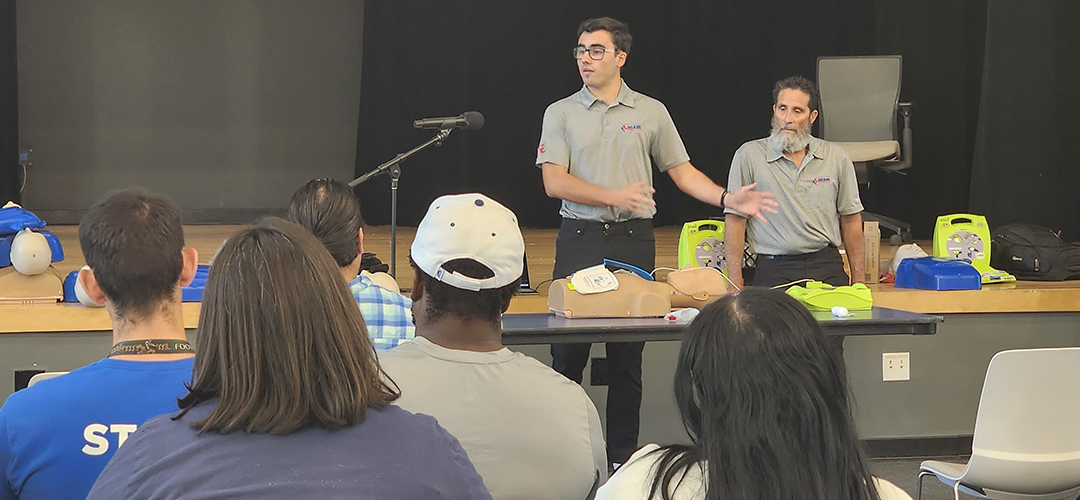
For many schools, sending employees to separate training sessions one by one is not the easiest path. Group instruction is often simpler, more consistent, and easier to manage. Some campuses may decide that custom CPR classes Miami providers offer are the best fit, especially if the goal is to train multiple staff groups on site. Others may lean toward group first aid training Miami options that can be built into professional development days or seasonal planning for athletics.
That kind of approach tends to work better because it keeps the training process organized and helps staff learn from the same framework.
Student Instruction Needs Planning Too
The student training requirement can be easy to underestimate. Because the law requires CPR and first aid instruction once in middle school and once in high school, districts need to decide where that content fits, who will teach it, and what equipment will be needed for hands-on practice.
That means implementation is not only about staff readiness. It is also about making sure the student side of the law can be delivered in a realistic way.
This Fits Into a Larger School Safety Plan
For many schools, this is easier to manage when it becomes part of their broader safety planning. Instead of treating AED readiness as a separate project, it often makes more sense to include it alongside staff emergency procedures, response planning, and other campus safety efforts already in progress.
What Florida Schools Need to Know About AED Maintenance and EMS Coordination
This is one of the areas that can get overlooked when too much attention goes to the device itself.
AED Maintenance Is Part of Compliance
Florida’s statute does not stop at saying schools must have an AED. It also says the device must be maintained according to the manufacturer’s operational guidelines and that schools must keep verification records.
In simple terms, schools need a process. Someone has to be responsible for checking the AED, monitoring expiration dates on pads or batteries, and documenting that the device is ready for use. It cannot just be installed and forgotten.
Schools Must Register AED Locations With Local EMS
The law also requires schools to register the location of each AED with the local EMS medical director. That requirement fits with the broader expectation that schools coordinate emergency response planning with local EMS.
That kind of coordination matters because in a true emergency, the school’s internal response and the outside emergency response need to connect quickly and clearly.
How the New Florida Law Changes CPR and First Aid Training for Students
The student training piece is one of the biggest changes in the law, and it is easy to miss if the conversation stays focused only on AED placement.
Students Must Receive Training in Middle School and High School
Florida school districts must now provide students with basic first aid and CPR instruction once during middle school and once during high school. This must happen through a physical education or health class, and it must include hands-on CPR skills practice and AED use.
That makes this a curriculum issue as much as an operations issue.
Schools Need Enough Lead Time to Implement Student Training Well
Even though the requirement sounds straightforward, it still involves planning. Schools need to think about class time, teaching materials, hands-on equipment, and who will oversee the instruction. Districts that begin early are likely to have a much smoother rollout than those that try to build the program too quickly.
How Miami Schools Can Prepare for the July 2027 AED Deadline
By now, school leaders should already be getting specific.
They should be identifying AED locations, deciding which staff members need training first, building or refining their PULSE plans, and creating a realistic timeline for student instruction and device maintenance. Schools that start now will have more flexibility and fewer last-minute problems as the deadline gets closer.
More importantly, they are more likely to end up with a plan that actually works when seconds matter.
FAQ About Florida School AED Requirements
Does Florida Law Require Public and Charter Schools to Have an AED?
Yes. By July 1, 2027, each public school, including charter schools, must have at least one operational AED on school grounds.
When Do Florida Schools Have to Install an AED on School Grounds?
The deadline is July 1, 2027. By that date, the AED must be operational, clearly marked, publicized, and maintained according to the law’s requirements.
What Is a PULSE Plan Under Florida’s New School AED Law?
A PULSE plan is a Plan for Urgent Life-Saving Emergencies. Florida requires each public school to create one to guide personnel in responding to sudden cardiac arrest and similar life-threatening emergencies on school grounds.
Does Florida Require CPR and AED Training for School Staff?
Yes. The law requires appropriate school staff to be trained in first aid, CPR, and AED use.
Do Florida Schools Have to Teach CPR to Middle and High School Students?
Yes. School districts must provide basic first aid and CPR instruction once in middle school and once in high school, and that instruction must include hands-on practice and AED use.
Do Florida Schools Have to Register AED Locations With Local EMS?
Yes. Schools must register each AED location with the local EMS medical director, and school officials must coordinate their PULSE plan with local emergency service providers.
What Does Florida Require for School AED Maintenance?
Florida requires schools to maintain AEDs according to the manufacturer’s operational guidelines and keep verification records showing the devices are being checked appropriately.
What Should Miami Schools Do in 2026 to Prepare for the 2027 AED Deadline?
Miami schools should already be deciding where AEDs will be placed, which staff members need training, how student CPR instruction will be delivered, and how the school’s PULSE plan will work with local EMS. That timing is a practical conclusion based on the law’s requirements and the amount of planning schools typically need.